Getting a call that someone you love has been arrested in North Carolina when you live hundreds or thousands of miles away creates a unique set of challenges. How do you help from another state? Can you post bail remotely? What documents do you need? How does payment work?
This comprehensive guide explains everything you need to know about out-of-state bail bonds, specifically for those helping loved ones arrested in Fayetteville, Cumberland County, and surrounding North Carolina areas.
Understanding Out-of-State Bail Bonds
An out-of-state bail bond is exactly what it sounds like: posting bail for someone when you (the co-signer) live in a different state than where the arrest occurred. Modern technology and secure online systems have made this process much simpler than it once was.
Common Out-of-State Scenarios
Scenario 1: You Live Elsewhere, Your Loved One Was Arrested Visiting NC
Your son, daughter, friend, or partner was visiting Fayetteville (perhaps connected to Fort Liberty military business) and got arrested. They need help getting out, but you’re in Florida, Texas, California, or any other state.
Scenario 2: You Live Elsewhere, Your Loved One Lives in NC
Your family member lives in Fayetteville or surrounding areas, but you moved away years ago. You’re the most financially stable family member and want to help, even though you’re not local.
Scenario 3: Active Duty Military Posted Away from NC
You’re stationed at a base in another state, but your family member was arrested near Fort Liberty. You need to help remotely while managing your military duties.
Scenario 4: The Defendant Lives Elsewhere but Was Arrested in NC
Your loved one lives out of state but was arrested while traveling through North Carolina. They need help navigating an unfamiliar jurisdiction.
All of these situations are common, and professional bail bond agencies like Bad Girlz Bail Bonding handle them daily with streamlined online processes.
Can You Really Post Bail from Another State?
Yes, absolutely. Posting bail from out of state is completely legal and increasingly common. The process differs slightly from local bail bonds, but it’s designed to be just as fast and effective.
What Makes Out-of-State Bonds Different?
Traditional (Local) Bail Bond:
- Co-signer visits bondsman’s office in person
- Signs physical paperwork
- Provides documents in person
- Pays via cash, check, or card at office
Out-of-State Bail Bond:
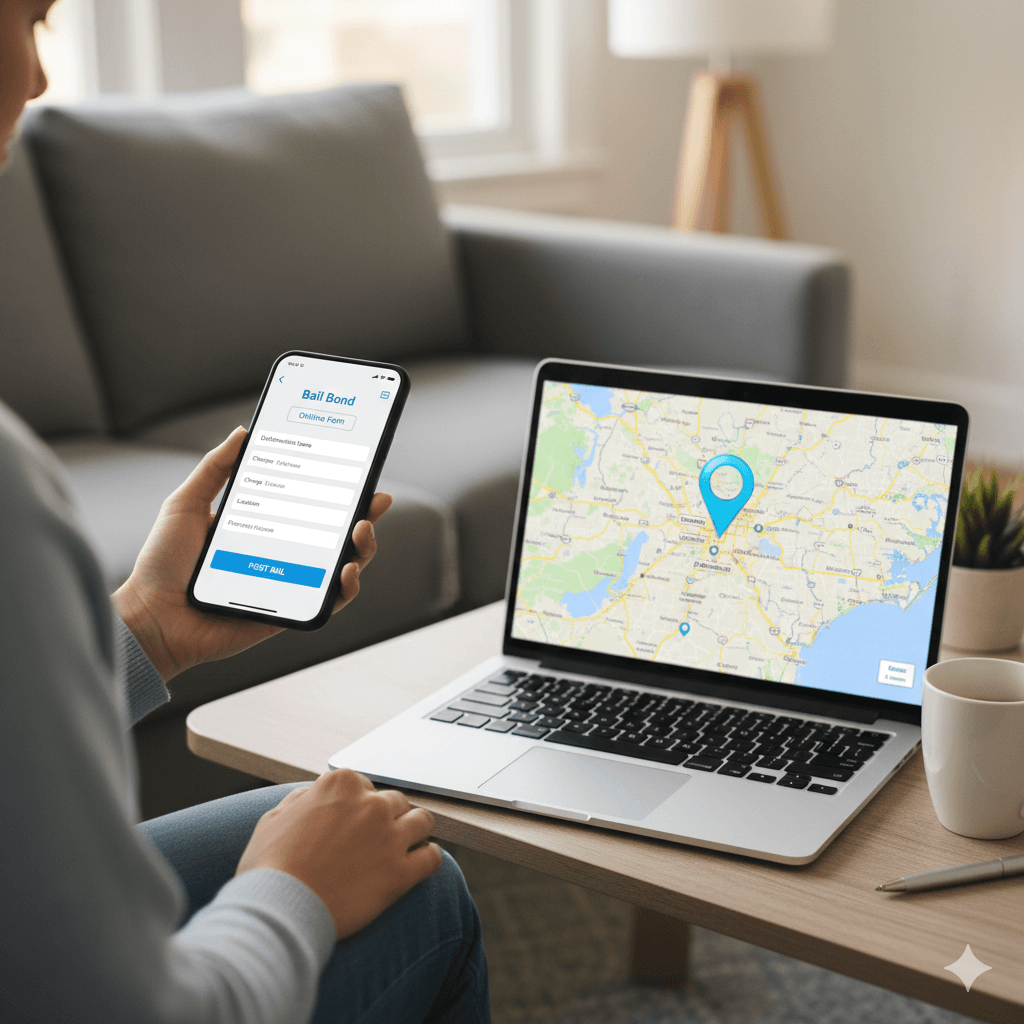
- All communication via phone, text, and email
- Digital paperwork with electronic signatures
- Scanned or photographed documents sent securely
- Online payment through secure portals
- No in-person visit required
The bail amount, fees, and legal requirements remain the same. Only the method of completing the process changes.
The Out-of-State Bail Bond Process: Step-by-Step
Step 1: Initial Contact and Information Gathering
When you first call a bail bondsman, you’ll provide:
About the Arrested Person:
- Full legal name (exactly as on their ID)
- Date of birth
- Location of arrest (Fayetteville, Hope Mills, Spring Lake, etc.)
- Where they’re being held (Cumberland County Detention Center, etc.)
- Booking number (if available)
- Charges filed
- Bail amount (if already set)
About Yourself (The Co-Signer):
- Your full name
- Your current address (in whatever state you live)
- Your phone number and email
- Your relationship to the arrested person
- Your employment and income information
The bondsman will explain:
- The total fee (10-15% of bail amount in NC)
- Payment options and plans available
- Required documents
- Timeline for release
- Your responsibilities as co-signer
Step 2: Complete Digital Paperwork
Modern bail bond agencies use secure online platforms like Bailbooks to handle paperwork electronically. You’ll receive links via email or text to complete:
Client Intake Form Basic information about the defendant and the arrest. This includes:
- Personal details (address, employment, phone)
- Emergency contacts
- Vehicle information
- Reference names and numbers
Indemnitor Agreement This is the co-signer contract where you agree to:
- Pay the bond fee
- Ensure the defendant appears for all court dates
- Accept financial responsibility if they fail to appear
- Understand conditions of release
Power of Attorney (If Applicable) Some jurisdictions require this for the bondsman to act on your behalf.
Authorization Forms Permission for background checks and verification of information provided.
Electronic Signatures
All forms can be signed electronically using:
- E-signature platforms (DocuSign-style)
- Typed signatures with IP confirmation
- Mobile signature capture
- Secure authentication methods
These electronic signatures are legally binding and accepted by all North Carolina courts and detention facilities.
Step 3: Submit Required Documents
You’ll need to provide scanned or high-quality photographs of several documents. Use your smartphone camera or scanner to create clear, readable images.
Required Documents:
Your Photo ID
- Driver’s license (both sides)
- State ID card
- Passport
- Military ID
Must be current and valid. Expired IDs are not accepted.
Proof of Your Address
- Recent utility bill (electric, gas, water)
- Mortgage statement or lease agreement
- Bank statement with address
- Official mail from government agencies
Must show your current out-of-state address and be dated within the last 60 days.
Proof of Employment/Income
- Recent pay stub
- Employment verification letter
- Business license (if self-employed)
- Tax returns (if requested)
- Bank statements showing regular deposits
This proves you have the financial stability to co-sign the bond.
Additional Documents (If Requested):
- Defendant’s ID (if available)
- Court paperwork (if already provided)
- Military orders (for service members)
- References with contact information
How to Submit Documents Securely
Most bail bond agencies offer multiple secure submission methods:
- Email: Send to a secure, encrypted email address
- Text message: Use secure messaging systems
- Online portal: Upload directly to Bailbooks or similar platforms
- Cloud storage: Share via Google Drive, Dropbox with permission access
- Fax: Traditional option still available if preferred
At Bad Girlz Bail Bonding, we use Bailbooks for maximum security and convenience.
Step 4: Make Payment Remotely
Out-of-state payments are processed electronically through secure systems.
Payment Methods Accepted:
Credit Cards
- Visa, Mastercard, Discover, American Express
- Processed through PCI-compliant systems
- Instant confirmation and receipt
Debit Cards
- Must be from a checking account
- Same security standards as credit cards
- Immediate processing
Bank Transfers
- ACH transfers for larger amounts
- Takes 1-2 business days to clear
- Lower processing fees than cards
Payment Plans
- Available for qualifying out-of-state co-signers
- Down payment required
- Automated weekly and biweekly payment options available.
- Secure auto-draft from checking account or card
Payment Plan Considerations for Out-of-State Co-Signers
Getting approved for a payment plan from out of state may require:
- Higher down payment than local co-signers
- Stronger employment verification
- Better credit history
- More references
- Larger initial payment
This is because the bail bond agency needs assurance of payment when you’re not local.
Example Payment Plan:
$10,000 bail = $1,000-$1,500 total fee
- Down payment: $400-$500
- Monthly payment: $100-$150 over 6-12 months
- Automatic withdrawal on the 1st or 15th of each month
Step 5: Bond Is Posted
Once payment is received and all documents are verified, the bondsman immediately contacts the detention facility to post the bond.
Expected Timeline:
- Paperwork completion: 30 minutes to 2 hours (depending on your speed)
- Verification process: 15-30 minutes
- Bond posting: Immediate once approved
- Release from facility: 2-6 hours after bond is posted
Release times depend on:
- Time of day
- Facility workload
- Day of the week (weekends are slower)
- Computer systems and processing
- Any additional holds or warrants
Step 6: Post-Release Communication
After your loved one is released, you’ll receive:
- Confirmation of release via text, email, or phone
- Court date information (exact date, time, and location)
- Conditions of release (travel restrictions, no-contact orders, etc.)
- Bondsman contact information for questions
- Payment receipts and schedule (if on a payment plan)
You’ll also receive automated court date reminders through systems like Bailbooks to ensure no one forgets.
Special Challenges of Out-of-State Bail Bonds
Challenge 1: Verifying Information
When you’re not local, verifying details can be harder. Tips:
- Get booking number early: This speeds up everything
- Have multiple contacts: Get names and numbers of others who can help
- Request confirmation emails: Always get written confirmation of information
- Screenshot everything: Keep records of all communications
Challenge 2: Trust and Verification
Bail bondsmen need to verify you are who you say you are when you’re remote.
They may:
- Call your employer to verify employment
- Check your address against public records
- Run credit checks (with permission)
- Contact your references
- Verify your photo ID against databases
You should also verify them:
- Check online reviews (Google, Facebook, BBB)
- Verify their license with NC Department of Insurance
- Confirm office address and phone number
- Ask about their experience with out-of-state clients
Challenge 3: Time Zones
If you live across multiple time zones, coordinate carefully:
- East Coast to West Coast: 3-hour difference means early morning calls may be necessary
- International calls: May need to wake up at unusual hours
- Business hours: Some offices have specific hours for processing payments
Bad Girlz Bail Bonding operates 24/7, eliminating time zone concerns.
Challenge 4: Following Up Remotely
As the out-of-state co-signer, you need to:
- Ensure the defendant attends all court dates
- Make sure they comply with release conditions
- Keep track of payment plan obligations
- Maintain communication with the bondsman
Helpful strategies:
- Set calendar reminders for court dates
- Stay in regular contact with your loved one
- Ask a local family member to verify attendance
- Keep the bondsman’s number saved in your phone
Legal Responsibilities as an Out-of-State Co-Signer
Your legal obligations don’t change because you live elsewhere. As co-signer (indemnitor), you’re financially responsible if the defendant:
Fails to Appear in Court
If your loved one misses a court date:
- A warrant is issued immediately
- The bond enters forfeiture
- You’re liable for the full bail amount (not just the fee you paid)
- The bondsman may hire a fugitive recovery agent
- You could be sued for the full amount
Full bail amount liability examples:
- $5,000 bail = You owe $5,000
- $25,000 bail = You owe $25,000
- $100,000 bail = You owe $100,000
This is in addition to the fee you already paid, which is non-refundable.
Violates Conditions of Release
If the defendant:
- Violates a no-contact order
- Leaves the county/state without permission
- Fails drug tests
- Commits new crimes
- Doesn’t report to probation/pretrial services
Their bond can be revoked, resulting in re-arrest. You remain obligated for payments and may still be liable if they flee.
Protection Strategies
To protect yourself financially:
- Only co-sign for people you trust completely
- Verify they understand their obligations
- Keep in regular contact with them
- Save all documentation and receipts
- Set reminders for all court dates
- Consider collateral requirements (some bondsmen require property as security)
- Understand exactly what you’re signing before committing
Out-of-State Bonds and Military Families
Cumberland County is home to Fort Liberty (formerly Fort Bragg), making military-connected out-of-state bonds extremely common.
Active Duty Service Members Helping from Afar
If you’re stationed elsewhere but need to help someone arrested in Fayetteville:
- Use military email for verification
- Provide LES (Leave and Earnings Statement) as income proof
- Include your unit information
- Explain your connection to the area (previous station, family there)
- Mention security clearance if relevant (shows stability)
Military co-signers are often viewed favorably due to stable employment and verifiable income.
Helping a Service Member from Out of State
If your family member in the military was arrested:
- Notify their command (bondsman may coordinate with unit)
- Understand UCMJ implications (military justice runs parallel)
- Consider career impact (clearances, promotions, career field)
- Work with experienced bondsmen who understand military cases
Bad Girlz Bail Bonding has extensive experience with Fort Liberty-connected cases.
Technology That Makes Out-of-State Bonds Possible
Modern bail bond technology has revolutionized the industry. Platforms like Bailbooks enable:
For Co-Signers:
- Complete all paperwork online
- Upload documents via smartphone
- E-sign contracts securely
- Make payments from anywhere
- Receive automatic court reminders
- Track payment history
- Communicate with bondsman via app
For Bondsmen:
- Instant verification of information
- Secure document storage
- Automated reminder systems
- Payment processing and tracking
- Client communication tools
- Compliance with regulations
This technology makes out-of-state bonds as simple and secure as local bonds.
Cost Differences: Out-of-State vs Local Bonds
Good news: The fees don’t increase because you’re out of state.
North Carolina regulates bail bond fees up to 15%.
These rates apply equally to local and out-of-state co-signers.
Example:
- $10,000 bail with local co-signer: $1,000-$1,500 fee
- $10,000 bail with out-of-state co-signer: $1,000-$1,500 fee
Possible additional costs:
- Collateral may be required to help ensure the client’s court appearances.
Always ask for a complete fee breakdown before committing.
Red Flags: Avoid Out-of-State Scams
Unfortunately, scammers target desperate families, especially those from out of state. Watch for these warning signs:
🚩 Demanding payment before providing information
Legitimate bondsmen explain the process before requiring payment.
🚩 Requesting payment via wire transfer, gift cards, or cryptocurrency
Professional agencies use legitimate payment processors (Bailbooks, Clover, etc.).
🚩 No physical address or license number
All NC bail bondsmen must be licensed. Verify with the NC Department of Insurance.
🚩 Prices that seem too good to be true
Fees are regulated by state law. Anyone charging significantly less is likely a scam.
🚩 High-pressure tactics or immediate payment demands
Reputable bondsmen give you time to gather documents and make informed decisions.
🚩 No website, reviews, or online presence
Established agencies have verifiable online reputations.
Verifying a Legitimate Bail Bondsman
Before sending money or documents:
- Check their website (look for professional design, clear information)
- Read online reviews (Google, Facebook, Better Business Bureau)
- Verify their license (NC Department of Insurance website)
- Call their office (confirm address and license number)
- Ask questions (legitimate bondsmen answer thoroughly)
- Trust your instincts (if something feels wrong, investigate further)
Frequently Asked Questions About Out-of-State Bonds
Can I co-sign from any state?
Yes. You can co-sign from anywhere in the United States. International co-signers face additional verification requirements.
Do I need to travel to North Carolina?
No. The entire process can be completed remotely using online systems, phone calls, and secure document submission.
How long does it take to process an out-of-state bond?
With all documents ready, the process takes 1-3 hours from start to bond posting. Release from jail takes an additional 2-6 hours.
What if I don’t have all the required documents?
Your bondsman can work with you to find alternatives. For example, if you don’t have a utility bill, a bank statement may suffice.
Can I use property as collateral from out of state?
Yes, but it requires additional documentation: property deed, recent appraisal, mortgage information, and sometimes a lien filing.
What happens if I’m on a payment plan and miss a payment?
Contact your bondsman immediately. Most will work with you to avoid bond revocation. Ignoring missed payments can result in re-arrest of the defendant.
Will I need to appear in North Carolina courts?
No. As the co-signer, you’re not required to attend court. Only the defendant must appear.
Can I transfer the bond to a local co-signer later?
Possibly. This requires the bondsman’s approval and full financial review of the new co-signer.
Finding the Right Bail Bondsman for Out-of-State Help
When choosing a bail bondsman to work with remotely, prioritize:
✅ 24/7 availability (arrests don’t follow business hours) ✅ Experience with out-of-state clients (streamlined processes) ✅ Secure online systems (Bailbooks or equivalent) ✅ Clear communication (responsive to calls, texts, emails) ✅ Transparent pricing (no hidden fees or surprises) ✅ Strong reviews (particularly from out-of-state clients) ✅ Licensed and bonded (verifiable with state authorities)
Bad Girlz Bail Bonding specializes in out-of-state bail bonds, offering:
- Complete online processing through Bailbooks
- 24/7 immediate response (not an answering service)
- Experience with military families and Fort Liberty cases
- Clear communication and step-by-step guidance
- Secure document handling and payment processing
- Court date reminders and ongoing support
Conclusion: You Can Help from Anywhere
Distance doesn’t prevent you from helping a loved one arrested in North Carolina. Modern technology, secure online systems, and experienced bail bondsmen make out-of-state bail bonds simple and effective.
The key is working with a professional, licensed agency that specializes in remote bail bond processing and treats you with respect throughout the process.
Remember:
- Gather information quickly
- Choose a reputable, licensed bondsman
- Have your documents ready
- Ask questions about anything unclear
- Follow through on your obligations
- Stay in communication throughout the process
An arrest is stressful enough without the added complication of distance. But with the right help, you can secure your loved one’s release quickly, even from thousands of miles away.
Need to post bail from out of state? Bad Girlz Bail Bonding makes the process simple with complete online processing, secure payments, and 24/7 support. Call now or visit our website to start the intake process.
Serving North Carolina from anywhere: Fayetteville • Fort Liberty • Cumberland County • Hoke County • Robeson County • Hope Mills • Spring Lake • Lumberton • All Surrounding Areas
Remote bail bonds available 24/7 for out-of-state families