Table of Contents
- Why a Felony Arrest Feels Completely Different From What You Expected
- NC Felony Classifications Explained Simply
- Can You Bail Someone Out for a Felony in NC?
- How Felony Bail Hearings Work in NC
- How Much Is Bail for a Felony Charge in NC?
- Bail Bondsman vs Attorney: Which Do You Call First?
- What to Do in the First 24 Hours
- Bail Has Been Set and You Are Ready to Act
- What the Cosigner Needs to Know for a Felony Bail Bond
- Frequently Asked Questions About Felony Arrests in NC
- You Do Not Have to Navigate This Alone
The phone call came and everything changed in that moment.
A felony. That word carries a weight that a regular arrest does not. It brings a different kind of fear, a different kind of confusion, and a lot of questions that nobody prepared you to answer.
You do not have time to sort through legal websites written by attorneys for other attorneys. You need to know what to do right now, in plain language, by someone who actually helps families through this situation every day.
This guide gives you that. Step by step. In the order you actually need it.
If bail has already been set and you are ready to move, Bad Girlz Bail Bond serves Fayetteville , Cumberland County, and all of North Carolina right now. Call us at +1 910-364-2900 and we will get started immediately.
Why a Felony Arrest Feels Completely Different From What You Expected
The Fear That Comes With the Word “Felony”
Most people have a vague understanding that felonies are serious. Beyond that, the word creates a specific kind of panic because it implies permanence, because it suggests that whatever happens next will be different and bigger than anything you have dealt with before.
That fear is understandable. But it is also manageable once you understand what you are actually dealing with.
What You Can and Cannot Control in the Next Hour
You cannot change the arrest. You cannot speed up the booking process. You cannot make the bail hearing happen faster than the system allows.
What you can control is being ready the moment action becomes possible. That means gathering information, understanding what the process looks like, and knowing exactly who to call and when.
That is what the rest of this guide gives you.
NC Felony Classifications Explained Simply
North Carolina classifies felonies from Class A (most serious) through Class I (least serious). The felony class directly affects how bail is set, with higher classes typically resulting in higher bail amounts or, in the most serious cases, detention without bail pending a hearing before a Superior Court judge.
Class A Through Class I: What the Letters Mean
Class A felonies are the most serious charges in NC law. Class I felonies at the other end of the spectrum are significantly less severe but still carry consequences well beyond any misdemeanor. Most felony arrests that families encounter fall somewhere in the Class C through Class I range.
The letter on the charge tells you how serious the court is likely to treat the situation and gives you a rough indication of what bail might look like.
Why the Felony Class Affects the Bail Amount Significantly
A Class I felony charge in NC carries different bail considerations than a Class C or Class B felony. Higher felony classes signal greater perceived risk to the court, which typically translates to higher bail amounts or more restrictive conditions of release.
What Common Felony Charges Look Like in Cumberland County
In the Fayetteville and Cumberland County area, common felony arrests include drug-related charges, property crimes above certain dollar thresholds, assault charges involving serious injury, and weapons violations. The specific charge and its classification directly shape everything that follows in the bail process.
Can You Bail Someone Out for a Felony in NC?
Yes, in most cases you can bail someone out for a felony charge in North Carolina. Bail is set by a magistrate or judge based on the charge, the defendant’s criminal history, and their perceived flight risk. Most felony charges result in bail being set, though the amounts are typically higher than for misdemeanor arrests. Some serious felony charges may result in a temporary hold pending a bail hearing before a Superior Court judge.
The Direct Answer
For the vast majority of felony arrests in Cumberland County and across North Carolina, bail is possible. The process is different and the amounts are higher, but the path from arrest to release through a bail bond remains available to most defendants.
When Bail May Be Denied for Felony Charges in NC
A court may order that a defendant be held without bail for certain Class A and Class B1 felonies, for defendants with significant prior criminal history, or for cases where the court determines the defendant poses an extreme flight risk or an immediate danger to the community.
If bail is denied at the initial appearance, an attorney can petition for a bail hearing before a Superior Court judge. This hearing is where legal representation becomes especially important.
How Felony Bail Hearings Work in NC
For most felony arrests in NC, the initial bail determination happens at the first appearance before a magistrate, typically within hours of booking. For more serious felony charges, bail may be reviewed by a District Court or Superior Court judge at a subsequent hearing. The judge considers charge severity, criminal history, community ties, and flight risk before setting the amount.
Who Sets Bail for a Felony Charge
A magistrate handles the initial appearance for most arrests in Cumberland County, including many felony charges. For more serious felony charges, the bail determination moves to a District Court or Superior Court judge, sometimes requiring a separate scheduled hearing.
What the Judge or Magistrate Considers
The court weighs the severity of the alleged offense, the defendant’s prior criminal record, how long they have lived in the community, whether they have stable employment and family ties, and any perceived risk of fleeing or reoffending before trial.
How Long Before Bail Is Set After a Felony Arrest
Initial bail determination typically happens within the first several hours of booking. For charges requiring a judge rather than a magistrate, this process may extend to the next business day or require a separately scheduled hearing.
How Much Is Bail for a Felony Charge in NC?
Felony bail in North Carolina typically ranges from $5,000 to $500,000 or more depending on the charge class and individual circumstances. A Class I felony might see bail in the $5,000 to $25,000 range. More serious Class C through Class F felonies often see bail from $25,000 to $150,000. Class A and Class B charges may involve bail well above these ranges or temporary denial pending review.
Typical Bail Ranges by Felony Class
These are general ranges based on Cumberland County patterns. Actual bail amounts vary significantly based on criminal history and specific circumstances:
- Class I and Class H felonies: $5,000 to $25,000
- Class G and Class F felonies: $15,000 to $75,000
- Class E and Class D felonies: $50,000 to $200,000
- Class C and above: $100,000 and higher
What Pushes Felony Bail Higher or Lower
Prior convictions, failure to appear history, alleged involvement with weapons, and the specific details of the offense all push bail higher. Strong community ties, stable employment, first-time offense status, and family support can work in the defendant’s favor at the hearing.
What 15 Percent of a Felony Bail Amount Looks Like in Real Numbers
North Carolina law sets the bail bond premium at 15 percent of the total bail amount. On a $25,000 felony bail, the premium is $3,750. On a $75,000 felony bail, the premium is $11,250. This is the amount you pay to a licensed bondsman to secure release without producing the full bail amount yourself.
For a full explanation of how the NC 15 percent bail bond rate works, our guide on how much a bail bond costs in North Carolina gives you the complete breakdown with real examples.
Bail Bondsman vs Attorney: Which Do You Call First?
Call an attorney as soon as possible regardless of bail status because legal representation is critical from the earliest stage of a felony case. Contact a bail bondsman only after bail has been set because there is nothing a bondsman can do until a bail amount exists. The two roles serve completely different purposes and are not in competition with each other.
What a Bail Bondsman Does in a Felony Situation
A bail bond agent secures the defendant’s release from custody by posting a surety bond with the court once bail is set. They do not provide legal advice, do not influence the bail hearing, and cannot help the defendant’s legal case in any way. Their role begins the moment a bail amount is established.
What a Defense Attorney Does in a Felony Situation
A defense attorney can attend the bail hearing and advocate for a lower bail amount. They can challenge probable cause. They guide the defendant through the entire legal process from initial appearance through resolution. Their role begins at the earliest possible moment and continues through the entire case.
The Honest Answer About Sequencing
Start working on finding an attorney immediately. If the defendant cannot afford an attorney, they have the right to a court-appointed public defender in NC. Once bail is set, then call a bail bondsman. Both actions are necessary. Neither replaces the other.
What to Do in the First 24 Hours
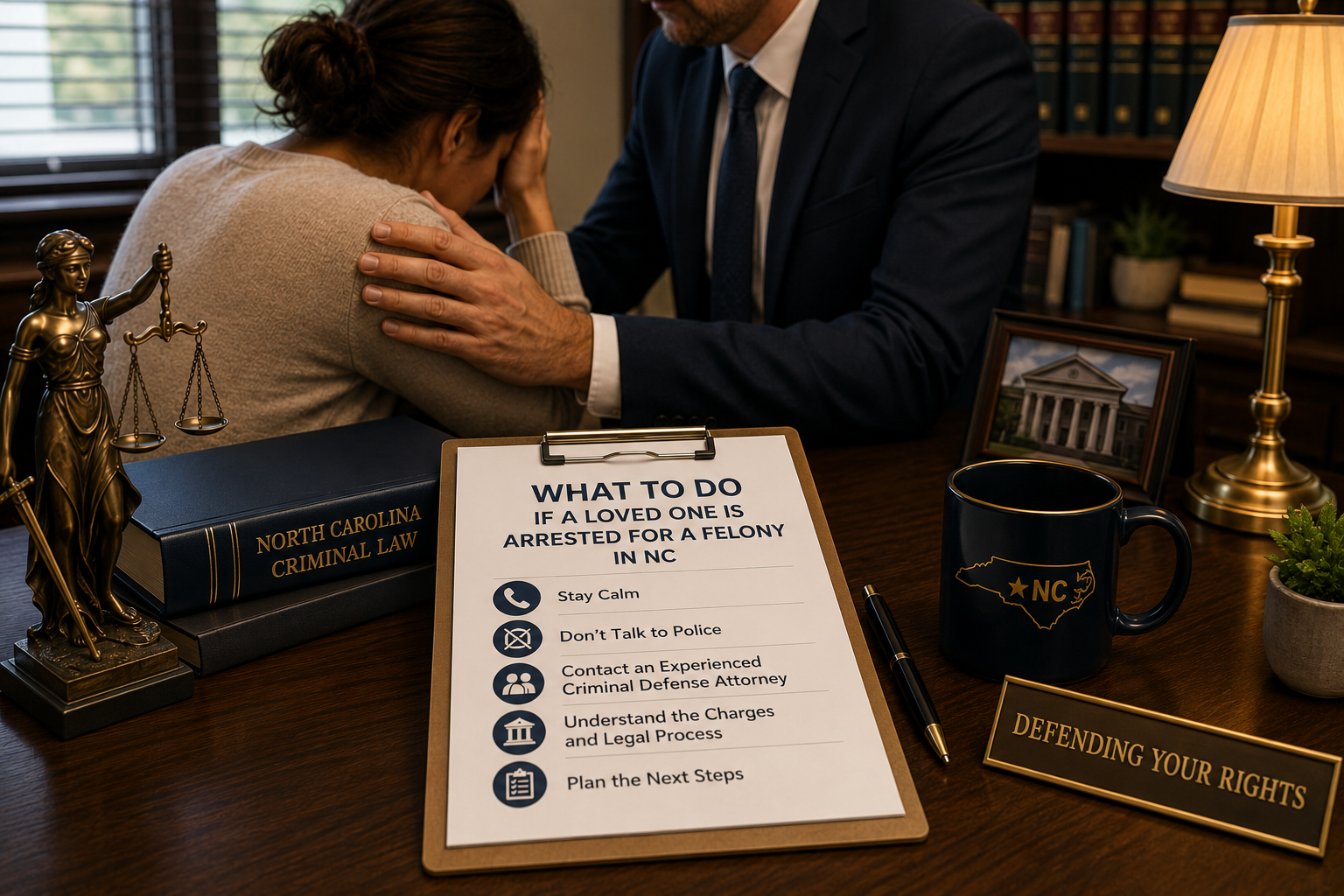
In the first 24 hours after a felony arrest in NC, gather the defendant’s full name and booking information, contact or begin researching a criminal defense attorney, wait for bail to be set at the initial appearance, and contact a licensed bail bond agent immediately once bail is established.
Hour One: What to Gather and Who to Contact
Find out which facility the defendant is being held in. Get their full legal name, date of birth, and booking number if available. Contact Cumberland County Detention Center directly if you are uncertain where they are held.
Begin making contact with criminal defense attorneys. If immediate representation is not possible, note names and contact information to follow up as soon as possible.
Once Bail Is Set: Your Immediate Next Steps
The moment bail is set, you have two priorities. Contact a licensed bail bond agent to begin the release process. And make sure the defense attorney knows the bail amount so they can advise on whether to accept it or petition for a lower amount.
Do not wait. Every hour after bail is set is an hour your loved one remains in custody unnecessarily.
What to Avoid Doing During This Period
Do not discuss the case details over phone calls from the jail, which are recorded. Do not post anything about the arrest on social media. Do not make promises to the defendant about outcomes you cannot guarantee. Do not contact the alleged victim or any witnesses.
Bail Has Been Set and You Are Ready to Act
If bail has been set for a felony charge and you need to move immediately, this is exactly the moment to call.
Bad Girlz Bail Bond handles felony bail bonds across Fayetteville, Cumberland County, and all of North Carolina. We are available around the clock. We know how to move quickly on high-stakes situations and we will walk you through every step of the process.
Call +1 910-364-2900 right now or find us on Google Maps. You can also review our payment options before calling if you want to understand what the financial process looks like first.
What the Cosigner Needs to Know for a Felony Bail Bond
Why Felony Bonds Sometimes Require Collateral
Felony charges often involve higher bail amounts that create greater financial exposure for the bail bond agent. To protect against that exposure, bondsmen frequently require collateral in addition to the 15 percent premium for higher felony bail amounts.
Collateral is typically a valuable asset, such as real estate equity, a vehicle title, or other property, that the bondsman holds as security until the case concludes and the bond is exonerated.
What Collateral Is Typically Acceptable
Common forms of collateral for felony bail bonds include real property with available equity, vehicle titles, jewelry of verifiable value, and in some cases bank accounts or financial instruments. The specific collateral requirements depend on the bail amount and the bondsman’s assessment of the overall risk.
What the Cosigner Is Agreeing to With a Felony Bond
A cosigner on a felony bail bond takes on responsibility for ensuring the defendant appears at every required court appearance through the entire case. Felony cases can take months to resolve and involve multiple hearings. That commitment extends through all of them.
If the defendant fails to appear, the cosigner faces potential financial liability for the full bail amount. Understanding this before signing is not optional. A reputable bail bond agent will explain these obligations clearly before asking for any signature.
Frequently Asked Questions About Felony Arrests in NC
What should I do immediately if a loved one is arrested for a felony in NC?
Gather the defendant’s full name, booking location, and any available charge information. Contact or research a criminal defense attorney as soon as possible. Wait for bail to be set at the initial appearance, then contact a licensed bail bond agent immediately once the amount is established. Do not discuss case details over recorded jail phone lines.
Can you bail someone out for a felony charge in NC?
Yes, in most cases. Bail is set for the majority of felony charges in North Carolina by a magistrate or judge. Higher felony classes typically result in higher bail amounts. Some serious Class A and Class B1 charges may result in a temporary hold pending a bail hearing before a Superior Court judge, but bail is possible for most felony arrests.
How much is bail for a felony charge in North Carolina?
Felony bail in NC typically ranges from $5,000 for lower-class felonies to well over $100,000 for serious Class B and Class C charges. The specific amount depends on the felony class, the defendant’s criminal history, community ties, and the judge’s or magistrate’s assessment of flight risk. The bail bond premium is 15 percent of whatever bail amount is set.
Should I call a bail bondsman or attorney first after a felony arrest?
Contact an attorney as soon as possible because legal representation is critical from the earliest stage of a felony case. Contact a bail bondsman only after bail has been set, since a bondsman cannot help until a bail amount exists. The two roles are completely separate and both are necessary for someone facing felony charges.
Do felony bail bonds require collateral in NC?
Not always, but frequently for higher bail amounts. When the bail amount is substantial, bail bond agents often require collateral in addition to the 15 percent premium to protect against the greater financial exposure involved. Common forms of collateral include real estate equity, vehicle titles, and other valuable property.
How long does it take to get out of jail after a felony bail bond is posted?
Once a bail bond is posted with the Cumberland County Detention Center or any NC facility, the release process typically takes a few hours depending on facility volume and staffing. The bondsman has no control over the jail’s internal processing speed but will post the bond as quickly as possible to start the clock.
You Do Not Have to Navigate This Alone
A felony arrest is one of the most frightening things a family can face. The legal system is complicated, the stakes feel enormous, and the clock is running.
You do not have to figure all of this out on your own. Bad Girlz Bail Bond has supported families across Fayetteville, Cumberland County, and North Carolina through exactly this situation. We know the process, we know the facilities, and we know how to move quickly when every hour matters.
Call us at +1 910-364-2900, find us on Google Maps, or reach out through our contact page any time of day or night.
Bail is set. Someone is waiting. We are ready to help right now.